






The traditional approach to employee training has always involved classroom learning together with printed educational resources and established time blocks and teacher-directed training programs. The management teams at organizations continue to believe these methods work but they must manage increased difficulties because their workforce operates from different locations, works at various times and belongs to different departments and professional areas.
The educational system now requires a total transformation because digital learning technology has taken over from traditional teaching methods. Employees can access training materials through digital platforms that allow them to begin their courses whenever they want while monitoring their learning progress after finishing their first classroom session.
Organizations can establish continuous digital learning systems through Learning Management Systems, which unite all their training activities into one platform.
What Is a Learning Management System?
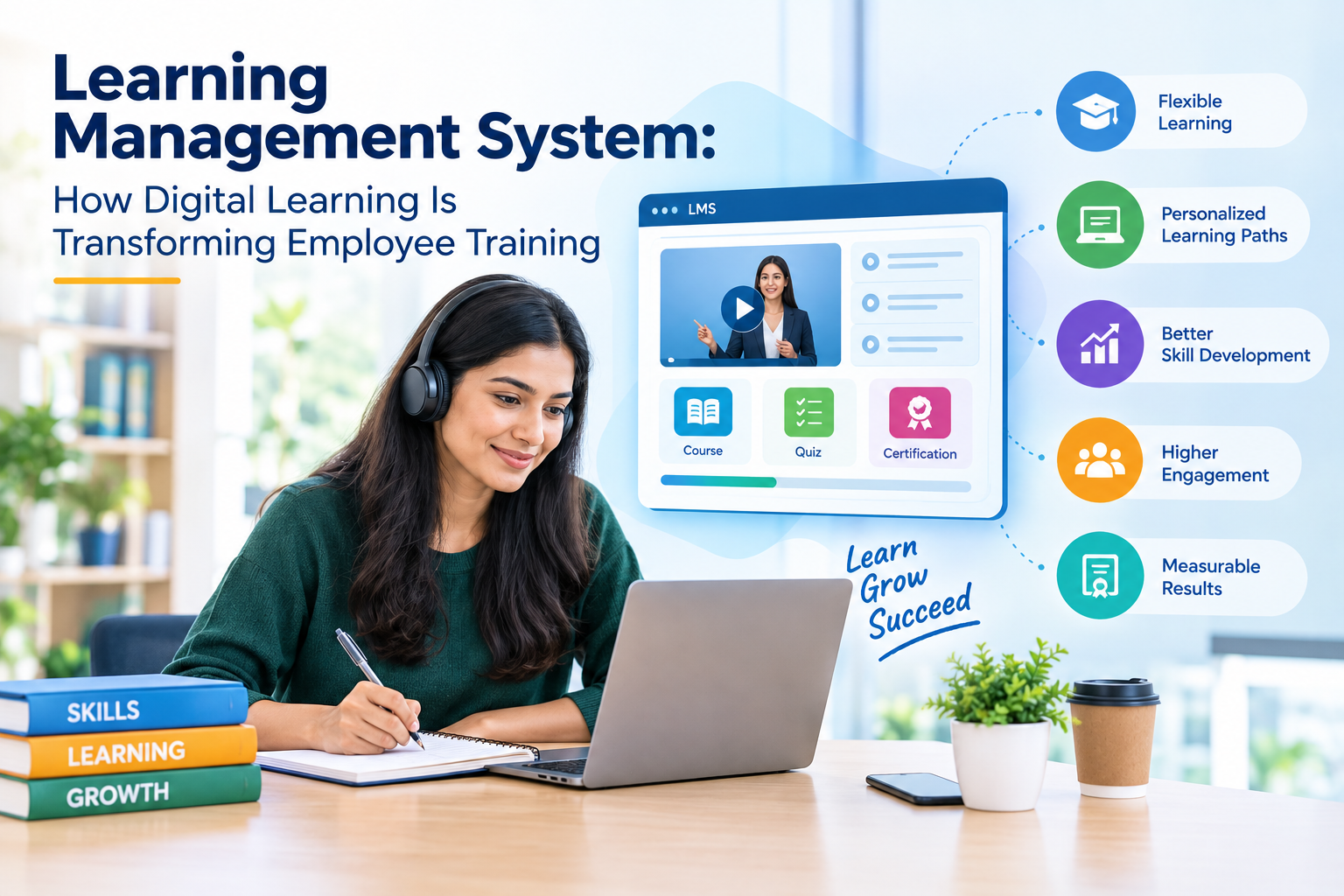
A Learning Management System (LMS) is a digital platform that organizations use to manage employee learning and training activities. It provides a centralized environment where businesses can organize courses, distribute learning materials, assign training, conduct assessments, monitor progress, and maintain training records.
The System allows businesses to distribute educational content that matches their employees’ job functions, departmental assignments, experience stages and their particular learning requirements.
The organization needs to provide two separate training programs because new employees should learn onboarding procedures and workplace policies yet managers require leadership development, performance management and team-building training.
The training system provides staff members with suitable learning resources because the system offers training materials that match their position duties.
How Digital Learning Is Changing Employee Training
Digital learning is changing employee training in several ways. The biggest change is that learning is no longer restricted to a particular room, trainer, or time slot.
A digital platform allows employees who work in offices, factories, branches and remote locations to access identical learning materials. Training programs become more effective when organizations create separate courses or modules that prevent employees from attending lengthy training sessions at once.
A typical digital learning process can look like:
Training Need → Course Assignment → Digital Learning → Assessment → Feedback → Completion → Skill Development → Progress Tracking
This approach allows organizations to make training an ongoing part of employee development rather than a one-time activity.
From One-Time Training to Continuous Learning
One of the major changes brought by digital learning is the shift from occasional training to continuous learning.
Businesses need to conduct traditional training programs whenever they establish new operational procedures, when new employees start their work and when specific training needs emerge. Digital learning enables organizations to deliver training programs that support employee development throughout their entire professional journey.
Organizations offer their employees refresher training sessions to learn about updated workflows and they receive product education for new product launches and skill development opportunities when they advance to different roles.
A Learning Management System can help HR teams organize these learning activities and maintain a record of completed and pending courses.
Personalized Training for Different Employee Roles
Employees working in the same organization do not necessarily have the same learning requirements. A sales employee may need product and communication training, while a software developer may require technical training. Similarly, factory workers, team leaders, and HR professionals may require completely different learning programs.
Digital learning makes it easier to provide content according to job functions, departments, experience levels, and specific training requirements.
For example, a new employee can be assigned onboarding and workplace policy courses, while an experienced manager can receive leadership development or performance management training.
This role-based approach helps organizations provide learning that is more closely connected to an employee’s actual responsibilities.
Digital learning provides another option.
The organization’s learning platform enables employees to access available courses through the organization’s learning platform according to the defined training schedule.
Organizations that operate distributed teams together with field workers, manufacturing facilities and shift-based staff members will find this approach particularly beneficial.
Learning Management Software can also help organizations maintain consistent training material across locations. Instead of different teams receiving different versions of training documents, the organization can manage approved learning content centrally.
Measuring Training Progress With Data
One of the limitations of manual training management is that it can be difficult to understand the complete training status of a workforce.
An employee may have attended a session, but attendance alone does not necessarily show whether the employee completed the required learning or understood the subject.
Digital learning can provide more measurable information.
Organizations can track indicators such as:
- Course assignments
- Course completion
- Assessment results
- Training attendance
- Pending courses
- Certification status
- Employee learning progress
- Department-wise training activity
This information can help HR and managers identify employees who have completed required training and areas where additional learning may be needed.
Making Employee Training More Accessible
Accessibility is another area where digital learning is changing training practices.
Workplace training needs to occur for staff members at various points during their employment journey. Organizations need to provide onboarding training for new staff members while current staff members should learn about process changes and experienced employees require specialized education for their particular roles.
Learning Management Software enables users to store their training content in one main system instead of sending files through different email platforms and physical storage locations.
The system shows employees their assigned learning activities directly while HR departments can store all training data in one centralized database.
Supporting Faster Training When Business Needs Change
Business processes can change quickly. Organizations may introduce new software, modify internal procedures, launch products, update policies, or introduce new workplace requirements.
When training is managed entirely through physical sessions, updating and delivering new information can take additional coordination.
Digital learning systems simplify the process of updating educational content because they distribute new courses through their all-in-one platform. HR teams together with learning departments, create educational resources for staff members who need to learn about organizational process transitions that organizations implement.
Businesses need to establish their training programs through direct business requirement alignment because this strategy enables them to react to fast market changes.
How Learning Management Software Supports Employee Development
Employee training is not only about completing mandatory courses. It can also support longer-term employee development.
Organizations can use digital learning to provide courses related to communication, leadership, technical skills, management, workplace practices, and other areas of professional development.
Training records can also help HR teams understand what learning employees have completed over time.
When learning information is connected with broader employee management processes, organizations can develop a more complete view of employee development.
This is where an integrated HRMS platform such as Savvy HRMS can fit into the wider employee management process. With 20+ powerful HR modules, Savvy HRMS helps organizations manage different stages of the employee lifecycle through a centralized HRMS environment, making it easier to connect employee information with other HR activities.
For example:
Employee Role → Required Skills → Training Assignment → Learning Progress → Assessment → Development
This creates a more structured connection between training and employee growth.
How It Reduces the Administrative Work of Training Teams
Managing training manually requires considerable coordination. HR teams may need to prepare attendance sheets, send reminders, collect assessment results, update spreadsheets, issue certificates, and prepare reports.
A Learning Management System can bring many of these activities into one platform.
The system performs automatic course assignments while sending notifications, tracking student progress and generating reports which eliminates the need for administrators to perform repetitive work. HR and training teams can now dedicate their time to develop learning programs and identify essential workforce development needs.
The level of automation will depend on the features and configuration of the software being used.
Can a Learning Management System Integrate With HRMS?
A Learning Management System can integrate with an HRMS when the selected platforms support the required integration.
This can allow employee information to be connected with learning activities. For example, employee department, designation, or role information may be used to determine relevant training assignments.
Training completion data can also become part of a broader employee record where supported by the integration.
The connection between HRMS and Learning Management Software allows organizations to avoid entering identical data twice while they can handle their employee records and educational programs through a unified system.
Organizations need to evaluate their existing APIs and integration capabilities together with data synchronization methods, security measures and system compatibility before they start implementing an LMS.
What Should Businesses Consider When Choosing Learning Management Software?
The right Learning Management Software depends on how an organization currently manages training and what it expects to achieve through digital learning.
Businesses should consider:
- Training requirements: What types of courses and learning programs need to be delivered?
- Employee access: Can employees easily access assigned learning content?
- Role-based learning: Can training be assigned according to employee roles or departments?
- Progress measurement: Can HR teams track course completion and assessment results?
- Content management: Can the organization easily add, update, and organize learning material?
- Reporting: Does the platform provide useful training and employee learning reports?
- Integration: Can it connect with the organization’s existing HRMS or other systems?
- Scalability: Can it support additional employees, locations, and training programs as the organization grows?
- Security: How does the platform protect employee and learning data?
The objective should be to select a system that fits the organization’s training structure rather than simply choosing a platform with a long list of features.
Conclusion:
Overall, Digital learning has transformed employee training because it now operates as a continuous process that provides measurable results instead of being a traditional classroom-based activity. Businesses can now provide their employees with easy access to learning content while they receive specialized training based on their roles and HR teams can monitor employee progress through their digital record system.
The learning management system provides essential support for this transformation because it joins together course management with employee education programs, evaluation systems, and progress monitoring and reporting functions into a single platform.
Ready to make employee management more organized and connected? Book your free demo today and discover how Savvy HRMS can support smarter employee management.