









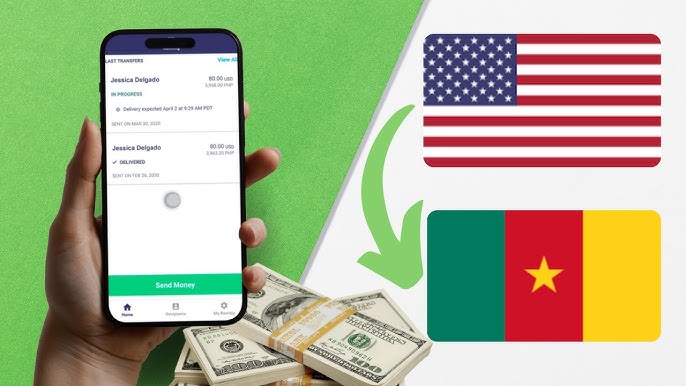
For millions of Cameroonians living abroad—from the snowy suburbs of Canada to the bustling streets of London and Paris—sending money home is a monthly ritual. Remittances are not just financial transactions; they are a lifeline that supports education, healthcare, and daily sustenance for families back home. In fact, remittances to sub-Saharan Africa have shown resilience in recent years, proving vital to local economies.
However, a recurring frustration for the diaspora is the feeling that the money sent is not the money received. Between the point of origin and the final destination in Douala or Yaoundé, a significant chunk of value often vanishes. This “leakage” is usually due to a combination of upfront fees, intermediary charges, and the most elusive cost of all: the exchange rate margin.
If you want to ensure your loved ones receive the maximum amount of Central African CFA Francs (XAF), you need to navigate the financial landscape carefully. Here is how to spot and avoid hidden charges when performing an international money transfer to Cameroon.
1. The Two Pillars of Transfer Costs
To save money, you must first understand how transfer services make their money. The total cost of a transfer is rarely just the advertised fee. It is generally composed of two parts:
- The Transfer Fee: This is the visible cost—a flat fee (e.g., £5 or $10) or a percentage of the transfer amount.
- The Exchange Rate Margin: This is the hidden cost. Banks and transfer providers typically do not convert your money at the “real” price they pay. Instead, they add a markup.
For example, if the real exchange rate is 1 USD = 600 XAF, a bank might offer you 1 USD = 570 XAF. On a $1,000 transfer, that difference means your recipient loses 30,000 XAF—often much more than the flat fee you paid upfront.
2. Check the Real Exchange Rate
Knowledge is power. Before you commit to a transaction, you need a benchmark. The “mid-market rate” is the midpoint between the buy and sell prices of two currencies—it is the rate you see on Google or financial news sites.
Most traditional banks and some transfer operators will skew the rate to their advantage. To avoid this, you should essentially audit your provider. Using a reliable currency converter allows you to see the current live mid-market rate. By comparing this live rate with the rate your provider is offering, you can instantly calculate the “hidden fee” embedded in the exchange rate. If the gap is significant, it is time to look for a different service.
3. Choose Digital Over Traditional
For decades, the only way to move money across borders was through high-street banks using the SWIFT network. While secure, this method is notoriously expensive and slow. Intermediary banks often take a cut along the way, reducing the final amount deposited.
Fortunately, technology has democratized finance. The most effective way to avoid high overheads is to send money to Cameroon using specialized digital platforms. These fintech companies do not have the massive overheads of physical bank branches, allowing them to offer leaner fees and tighter exchange rates.
When you transfer money to Cameroon online, you also gain the advantage of transparency. Reputable digital platforms will show you the exact amount the recipient will get before you click “send,” eliminating the surprise of deductions upon arrival.
4. Watch Out for “Receiving” Fees
Hidden charges don’t always happen on the sender’s end. Sometimes, the recipient is charged a fee to access the funds.
- Bank Deposits: Some banks in Cameroon may charge a fee for receiving an international wire transfer.
- Cash Pickup: Generally free for the receiver, but check the terms of the specific agent.
- Mobile Money: This is often the most cost-effective method. With the explosion of mobile penetration in Cameroon, services like MTN Mobile Money and Orange Money are ubiquitous. Sending directly to a mobile wallet avoids bank landing fees and allows recipients to use funds immediately for bills or purchases.
5. Selecting a Transparent Provider
With so many apps and services flooding the market, how do you choose? Trust is paramount. You need a service that balances speed, cost, and security.
A reliable Money transfer partner will be fully licensed and regulated by financial authorities in your country of residence (such as the FCA in the UK, FINTRAC in Canada, or FinCEN in the US). Regulated entities are required by law to be transparent about their pricing. If a provider’s website makes it difficult to find their fee structure or exchange rates, consider it a red flag.
6. The “Free Transfer” Myth
Be wary of services advertising “Zero Fees” or “Commission Free” transfers. In the world of finance, nothing is truly free. Usually, when a provider claims there are no fees, they are hiding a massive markup in the exchange rate.
Always look at the Total Cost of Ownership, which is:
(Transfer Fee) + (Amount Lost via Exchange Rate Markup)
Often, a provider charging a small upfront fee but offering a competitive exchange rate is actually the best way to send money to Cameroon compared to a “fee-free” provider with terrible rates.
7. Educational Resources and Planning
If you are sending large sums—perhaps for land purchase or business investment—the stakes are higher. The regulations surrounding large transfers can be complex, involving compliance checks and source-of-funds declarations.
Taking the time to educate yourself is an investment in itself. Reading a detailed guide or blog post on money transfer to Cameroon can help you understand the nuances of compliance, transfer limits, and the best times to send money based on currency fluctuation trends.
Summary: A Checklist for Savings
To ensure your hard-earned money reaches your family intact, follow this checklist:
- Compare: Never assume your bank is the only option. Compare at least three different specialized transfer services.
- Calculate: Don’t look at the fee alone. Look at the final amount of XAF the recipient gets.
- Avoid Credit Cards: Funding a transfer with a credit card often triggers “cash advance” fees from your card issuer. Use a debit card or bank transfer instead.
- Go Mobile: Prioritize sending to mobile wallets for lower fees and greater convenience for your recipient.
By shifting from traditional banking habits to savvy digital solutions and staying alert to exchange rate markups, the Cameroonian diaspora can save significant amounts of money annually—keeping wealth within the community where it belongs.